 GPAtlas
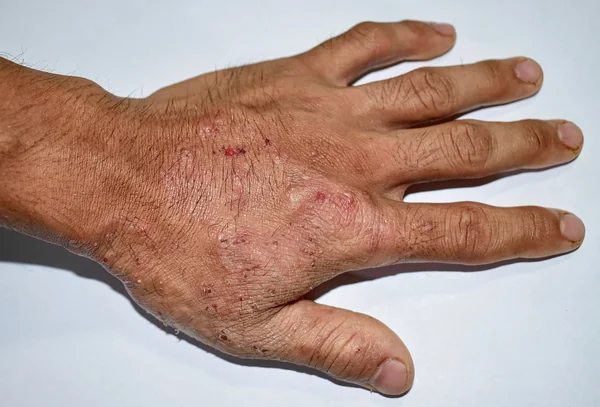
SCABIES
gpatlas.co.uk
🔍 When to Suspect
Intense itching that is characteristically worse at night, with a papular rash and possible mite burrows; a history of affected close contacts is highly suggestive
🩺 Assessment
- ◉ Symptoms + contacts → Intense nocturnal itching; ask about household members or sexual partners with similar symptoms
- ◉ Risk factors/history → Institutional setting (care home), recent new sexual partner, immunosuppression
- ◉ Impact + mimics → Effect on sleep and daily life; mimics include eczema, urticaria, insect bites
- ◉ Exam findings → Look for pathognomonic mite burrows (finger webs, wrists); widespread excoriated papules; sparing of head/neck in adults
💊 Management
🔸Key tests:
➤ Clinical diagnosis based on history and examination; skin scrapings are specialist-only
🔸Decontamination:
➤ Launder all bedding/clothing at ≥50°C on first treatment day; seal items that can't be washed in bags for 72 hours
🔸Pharmacological:
➤ First-line: Permethrin 5% cream applied to the whole body, left on for 8-12 hours, then repeated after 7 days
🔸Second-line:
➤ Malathion 0.5% lotion applied and left on for 24 hours, repeated after 7 days
🔸Post-scabetic itch:
➤ Reassure itch can persist for weeks after successful treatment; manage with emollients, topical steroids, or oral antihistamines
⚠️ Red Flags
• Crusted (Norwegian) scabies (thick crusted lesions, high mite load) especially in the elderly or immunocompromised
• Widespread secondary bacterial infection (impetigo, cellulitis)
• Diagnostic uncertainty, especially in atypical presentations
• Failure of two courses of correctly applied treatment
➡️ Referral Criteria
Urgent: Urgent dermatology referral for suspected crusted (Norwegian) scabies
Routine: Dermatology for treatment failure after two correctly applied courses or for diagnostic uncertainty
📌 GP Tips
🔹The most common reason for treatment failure is not treating all household members and close contacts simultaneously
🔹Reassure patients that post-treatment itch is very common due to an inflammatory reaction to dead mites and does not mean treatment has failed
Three whole topics are free to read. Every topic opens with a free account.
Your CPD is counted as you read, and kept from the day you join.
Join us, it’s free