 GPAtlas
🧭 When to suspect
Hyperhidrosis is sweating in excess of that needed for thermoregulation, arising from overactive eccrine sweat glands. It is common: primary focal disease affects roughly 1% of the population, and although benign, the impact on work, relationships and mood is frequently profound.
First separate primary from secondary hyperhidrosis, and never miss a sinister cause.
Suspect primary focal hyperhidrosis when there is visible, excessive, focal sweating lasting at least 6 months with no apparent cause, plus at least two of:
• Bilateral and relatively symmetrical.
• Onset before age 25.
• Frequency of at least one episode per week.
• Impairment of daily activities.
• A positive family history.
• Cessation during sleep.
Primary focal hyperhidrosis typically affects the axillae, palms, soles or craniofacial region.
Severity is graded with the Hyperhidrosis Disease Severity Scale (HDSS), a patient-rated 1–4 score in which 3 or 4 denotes severe disease and drives escalation.
| Feature | Primary (focal) | Secondary |
|---|---|---|
| Distribution | Focal, bilateral & symmetrical (axillae, palms, soles, craniofacial) | • Often generalised • May be unilateral or asymmetrical |
| Onset | Childhood or adolescence, usually before 25 | • Any age • Often new in adulthood |
| During sleep | Stops during sleep | May persist or wake the patient (night sweats) |
| Family history | Positive in 30–50% | Usually absent |
| Other clues | • Otherwise well • No systemic features |
• Weight loss, fever, palpitations or lymphadenopathy • A drug cause |
|
🧠 Clinical pearl • Whether the sweating stops in sleep is the most useful bedside discriminator. • Primary focal hyperhidrosis switches off overnight. • Drenching sweats that soak the sheets and wake the patient are a different problem and mandate a search for lymphoma, tuberculosis or chronic infection before anything is labelled "primary". |
Source: British Association of Dermatologists · British Journal of General Practice
🩺 History
| Ask about symptoms |
|---|
|
• Confirm the site (axillae, palms, soles, craniofacial) and symmetry: unilateral or asymmetrical sweating points to a secondary or neurological cause? |
|
• Ask whether the sweating stops during sleep: cessation favours primary, whereas night sweats favour a secondary cause? |
|
• Quantify duration (at least 6 months), frequency and the specific activities affected? |
|
• Screen for systemic symptoms such as weight loss, fever, palpitations or lymphadenopathy (which suggest a secondary cause)? |
|
• Ask about features of an underlying disorder such as thyrotoxicosis, diabetes or hypoglycaemia, the menopause, anxiety or infection? |
| Ask about risk factors and modifiers |
|---|
|
• Establish the age of onset: primary disease usually begins in childhood or adolescence, before 25? |
|
• Explore family history, positive in 30–50% of primary cases? |
|
• Identify triggers such as heat, emotion or anxiety, exercise, spicy food, caffeine and alcohol? |
|
• Take a full drug history: SSRIs (selective serotonin reuptake inhibitors) and other antidepressants, opioids and cholinesterase inhibitors commonly cause sweating? |
|
• Assess the impact on work, relationships and mood, and screen for associated anxiety or low mood? |
| 🧩 Patient Perspective |
|---|
|
➤ "Explore how the sweating affects clothing choices, social situations and everyday tasks, such as shaking hands, handling paper or money, or using a keyboard?" |
|
➤ "Ask whether the patient avoids situations out of embarrassment, and what they hope treatment will achieve?" |
Source: British Association of Dermatologists · British Journal of General Practice
⚠️ Red Flags
| Escalation criteria |
|---|
|
➤ Unilateral or asymmetrical sweating → suggests a focal neurological cause or local pathology → investigate or consider neurology |
|
➤ Drenching night sweats → possible lymphoma, tuberculosis or chronic infection → urgent investigation |
|
➤ New-onset sweating in an adult (especially over 25) without an obvious trigger → assume a secondary cause until excluded |
|
➤ Systemic features such as weight loss, fever, palpitations or lymphadenopathy → investigate for malignancy or infection |
|
➤ Severe headaches, palpitations and sweating → consider phaeochromocytoma → urgent endocrinology and plasma/urine metanephrines |
Source: British Association of Dermatologists · British Journal of General Practice
🔎 Examination
| Examination findings and signs |
|---|
|
• Visible sweating: beads of sweat, clammy palms or stained and damp clothing. |
|
• Distribution and symmetry: confirm whether focal and symmetrical (primary) or generalised and asymmetrical (secondary). |
|
• Skin complications: maceration, fungal infection or bacterial superinfection in affected folds and feet. |
|
• Signs of a secondary cause: goitre or tremor (thyrotoxicosis), or lymphadenopathy and hepatosplenomegaly (malignancy or infection). |
|
• Minor's starch-iodine test: a specialist test that stains actively sweating skin to map the area before targeted treatment. |
Source: British Association of Dermatologists · DermNet
💬 Patient Explanation
|
Hyperhidrosis means sweating much more than your body needs to keep cool, usually in the hands, feet, armpits or face. |
🧪 Investigations
Typical primary focal hyperhidrosis (young onset, focal, symmetrical, stops in sleep, no systemic features) needs no investigation. Tests are directed by the history when a secondary cause is suspected.
| Test | Indication |
|---|---|
| None | • Classic primary focal disease • The diagnosis is clinical, so no tests are required |
| FBC, ESR/CRP | If infection or malignancy is suspected (secondary hyperhidrosis). |
| TFTs (thyroid function tests), HbA1c | If thyrotoxicosis or diabetes is suspected. |
| Plasma or urine metanephrines (specialist-initiated) | • If phaeochromocytoma is suspected (headache, palpitations, sweating) • Rare |
| Chest X-ray | If tuberculosis or lymphoma is suspected (night sweats, weight loss). |
Source: British Association of Dermatologists · British Journal of General Practice
💊 Management
| All patients |
|---|
|
1. Confirm primary vs secondary first: treat or investigate any secondary cause, and reassure and explain if primary. |
|
2. Grade severity with the Hyperhidrosis Disease Severity Scale (HDSS) and agree what the patient wants from treatment. |
|
3. Start the treatment ladder with general measures plus prescription-strength aluminium chloride 20%. |
|
4. If aluminium chloride has not controlled sweating after about 4 weeks, refer for iontophoresis (palms or soles; delivered by dermatology) or offer a trial of an oral anticholinergic. |
|
5. Consider topical glycopyrronium bromide (GPB) cream for severe axillary disease where the above fail or are unsuitable. |
|
6. Refer to dermatology if topical and oral measures fail or quality of life is badly affected. |
|
7. Address the psychosocial impact throughout, screening for and supporting anxiety or low mood. |
| If severe or red flags |
|---|
|
• Red flags for malignancy (e.g. lymphoma) or phaeochromocytoma → urgent investigation or referral. |
|
• Severe (HDSS 3–4) or treatment-resistant disease → dermatology for botulinum toxin, iontophoresis or (last resort) surgery. |
|
• Generalised or clearly secondary sweating → refer to the relevant specialty to manage the underlying condition. |
|
🔑 Key principle: the primary/secondary fork drives everything • Before reaching for antiperspirants, decide which disease you are treating. • A focal, symmetrical pattern that began before 25 and stops in sleep, with a positive family history, is primary, so follow the treatment ladder. • Generalised, unilateral, adult-onset or nocturnal sweating, or any systemic feature, is secondary until proven otherwise, so investigate and treat the cause first. |
Source: British Association of Dermatologists · British Journal of General Practice
🧾 Non-pharmacological Treatment
| Intervention | Details |
|---|---|
| Antiperspirant use | • Apply at night to dry skin (most effective), not in the morning • Combined antiperspirant and deodorant products tackle both sweat and odour |
| Clothing | • Loose natural fibres (cotton, linen) • Absorbent underlayers, dress shields or sweat pads • Black or white minimises visible marks |
| Trigger avoidance | • Reduce known triggers such as spicy food, caffeine and alcohol • Manage emotional triggers where possible |
| Skin & foot care | • Soap substitutes if frequent washing irritates • Keep feet dry, change socks daily, rotate footwear to limit maceration and infection |
| Weight management | Weight loss helps where excess weight contributes to sweating. |
| Psychological support | • Acknowledge the social and emotional toll • Signpost peer support (e.g. Hyperhidrosis Support Group) and treat coexisting anxiety |
Source: British Association of Dermatologists · DermNet
⚕️ Pharmacological Treatment
| Treatment Options and Escalation |
|---|
|
➤ First-line topical (axillae/palms/soles) |
|
→ Aluminium chloride hexahydrate 20% (e.g. Driclor, Anhydrol Forte): apply at night to dry, unbroken skin and wash off in the morning. Once controlled, reduce to maintenance (1–2 times weekly). |
|
→ Manage the common skin irritation with emollients or short courses of 1% hydrocortisone; avoid shaving the area within 12 hours of application. |
|
→ Topical glycopyrronium or glycopyrrolate (off-label, usually specialist) can help craniofacial sweating where antiperspirants are impractical. |
|
➤ Second-line oral anticholinergics |
|
→ Propantheline bromide, the only oral drug licensed for hyperhidrosis: 15 mg three times daily about an hour before meals, titrated to a maximum of 120 mg/day. |
|
→ Oxybutynin or glycopyrronium bromide (off-label) are alternatives; start low and titrate. Counsel on anticholinergic effects (dry mouth, blurred vision, constipation, urinary retention) and use cautiously in older adults. |
|
➤ Topical glycopyrronium bromide (GPB) cream, severe axillary (NICE TA1175) |
|
→ Glycopyrronium bromide 1% cream (Axhidrox) is a licensed topical antimuscarinic for severe primary axillary hyperhidrosis in adults. NICE recommends it on the NHS after lifestyle advice, aluminium-based antiperspirants and oral antimuscarinics have not controlled sweating, or are contraindicated or not tolerated. |
|
→ One metered application to each armpit once daily. • Reduce to 2–3 times weekly after 4 weeks as tolerated. • Apply with the dispenser cap only, never the fingers, and wash hands. • Finger-to-eye transfer can cause pupil dilation and blurred vision lasting several days. |
|
→ Systemic anticholinergic effects can still occur; do not apply to broken or inflamed axillary skin, and use the armpit only. |
|
➤ Specialist-only treatments |
|
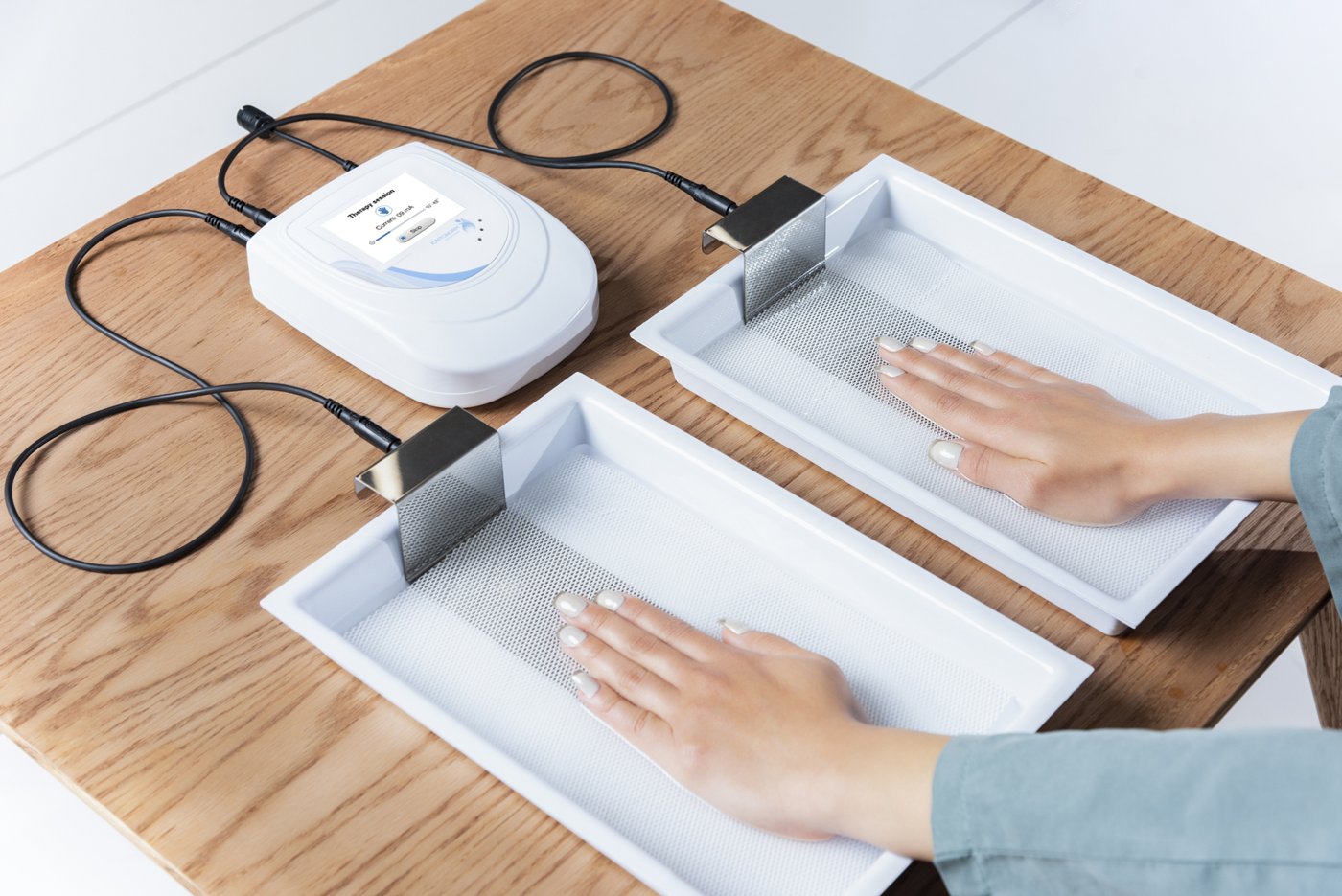
→ Iontophoresis: a weak electric current through water, effective for palms and soles (glycopyrrolate is sometimes added in specialist units). Needs ongoing maintenance. |
|
→ Botulinum toxin type A (e.g. Botox): licensed only for severe primary axillary hyperhidrosis (HDSS ≥ 3). • Around 50 units intradermally per axilla, lasting roughly 4–6 months. • The MHRA (Medicines and Healthcare products Regulatory Agency) warns of rare distant spread of toxin effect with all botulinum products. |
|
→ Surgery (endoscopic thoracic sympathectomy, ETS): a last resort, limited by frequent and sometimes severe compensatory sweating elsewhere. |
|
⚠️ Common pitfall • Patients abandon aluminium chloride because it stings, almost always a technique problem. • Aluminium chloride must go on at night, onto bone-dry skin (pat dry, or use a hairdryer on cool), and be washed off in the morning. • Applying it in the daytime, or to damp or freshly shaved skin, guarantees irritation and poor results. • Set this up properly at the first prescription. |
Source: NICE TA1175 · British Association of Dermatologists · MHRA
📌 Special Notes
|
📌 Prescribing safety: anticholinergics • Anticholinergic burden: oral anticholinergics, and to a lesser extent topical glycopyrronium, add to total anticholinergic load. Use cautiously in older adults (confusion, falls, urinary retention), and avoid or take care in narrow-angle glaucoma and significant prostatism. • Impaired heat loss: by reducing sweating, these drugs can blunt thermoregulation; counsel about overheating in hot weather or vigorous exercise, particularly in the elderly. • Driving: advise not to drive if affected by blurred vision or drowsiness. |
• No DVLA duty: hyperhidrosis itself carries no Driver and Vehicle Licensing Agency (DVLA) notification requirement; counsel only on the transient drug effects above.
• NHS funding: botulinum toxin and iontophoresis remain subject to local commissioning and may require an individual funding request (IFR). By contrast, glycopyrronium bromide cream is now NICE-recommended and NHS-funded for eligible patients. Manage expectations early.
• Compensatory sweating: warn explicitly that endoscopic thoracic sympathectomy (ETS) may trade axillary or palmar sweating for troublesome sweating of the trunk or thighs, which can be permanent.
• Natural history: primary hyperhidrosis often improves with age and is uncommon in the elderly; new excessive sweating in an older adult should prompt a search for a secondary cause.
Source: NICE TA1175 · British Association of Dermatologists · MHRA
➡️ Referral Pathways
| Urgent |
|---|
|
• Suspected phaeochromocytoma (headache, palpitations, sweating) → urgent endocrinology + plasma/urine metanephrines |
|
• Night sweats with weight loss or lymphadenopathy → urgent investigation for lymphoma/infection → Adult with unexplained lymphadenopathy or splenomegaly: consider a suspected cancer pathway referral for lymphoma → Child or young person with unexplained lymphadenopathy or splenomegaly: consider a very urgent referral for specialist assessment (an appointment within 48 hours) |
| Routine/specialist |
|---|
|
• Primary hyperhidrosis failing topical ± oral therapy, or Hyperhidrosis Disease Severity Scale (HDSS) 3–4 → dermatology for iontophoresis or botulinum toxin |
|
• Confirmed secondary cause (thyroid, diabetes, menopause) → relevant specialty to manage the underlying condition |
Source: British Association of Dermatologists · British Journal of General Practice
🏠 Take Home Messages
• Separate primary from secondary: primary is focal, symmetrical, starts before 25 and stops in sleep; generalised, unilateral or nocturnal sweating (especially with weight loss) points to a secondary cause that needs investigation.
• Always review the drug chart: SSRIs and other antidepressants, opioids and cholinesterase inhibitors are common culprits; reconsider these before escalating treatment.
• Ladder the treatment: prescription aluminium chloride 20% first, then iontophoresis or an oral anticholinergic; glycopyrronium bromide cream is now a NICE-recommended NHS option for severe axillary disease, with dermatology referral for botulinum toxin or, rarely, surgery.
• Get the topical technique right: aluminium chloride works only when applied at night to dry skin and washed off in the morning; irritation is the main reason patients give up on it.
• Don't miss the sinister causes: new adult-onset, asymmetrical or drenching night sweats, or the headache, palpitation and sweating triad of phaeochromocytoma, all warrant urgent investigation.
Source: NICE TA1175 · British Association of Dermatologists · British Journal of General Practice
|
🧭 AKT: high-yield facts • Primary focal hyperhidrosis = visible excessive sweating for ≥ 6 months plus ≥ 2 of: bilateral/symmetrical, impairs daily life, ≥ 1 episode/week, onset before 25, positive family history, stops during sleep. • Cessation in sleep favours primary; drenching night sweats favour a secondary cause (lymphoma, tuberculosis, infection). • First-line is prescription aluminium chloride hexahydrate 20% (Driclor, Anhydrol Forte), applied at night to dry skin. • Propantheline bromide is the only oral drug licensed for hyperhidrosis; oxybutynin and glycopyrronium are off-label, so beware anticholinergic effects. • NICE (TA1175, 2026) recommends glycopyrronium bromide 1% cream (Axhidrox) on the NHS for severe primary axillary hyperhidrosis after antiperspirants and oral antimuscarinics fail or are unsuitable. • Botulinum toxin A is licensed only for severe primary axillary hyperhidrosis (HDSS ≥ 3); endoscopic thoracic sympathectomy is a last resort because of compensatory sweating. • Hyperhidrosis carries no DVLA notification duty. |
|
🎯 SCA A 19-year-old retail worker attends with lifelong, severe sweating of the palms and armpits that soaks through shirts and makes handling money and shaking hands mortifying. It is fuelling social anxiety and low mood. He has read about Botox and asks for it on the NHS. He has not yet tried prescription antiperspirant. The challenge is to validate genuinely disabling distress while managing expectations honestly. NHS botulinum toxin is restricted (licensed only for severe axillary disease, usually after topical treatment has failed and via an individual funding request), and palmar disease is not a licensed indication. A secondary cause must still be excluded before labelling it primary. A strong consultation: • Explores his ideas, concerns and expectations (the social and emotional toll, and what he has already tried). • Screens sensitively for anxiety and low mood and offers support. • Confirms the picture is primary (focal, symmetrical, since childhood, stops in sleep, no red flags). • Explains the evidence-based ladder honestly, without over-promising NHS funding: aluminium chloride first, then iontophoresis via dermatology. Glycopyrronium bromide cream is now an option for severe axillary disease, with dermatology referral for possible botulinum toxin in refractory cases. • Agrees a shared plan with clear follow-up. • Safety-nets for any new systemic, asymmetrical or nocturnal sweating. • Maintains empathy and respects the patient's autonomy throughout. |
📎Reference: NICE TA1175. Glycopyrronium bromide cream for treating severe primary axillary hyperhidrosis. Available from: https://www.nice.org.uk/guidance/ta1175
📎Reference: NICE CKS. Hyperhidrosis. Available from: https://cks.nice.org.uk/topics/hyperhidrosis
📎Reference: Ashton S, Winter S, Thomas C, Mughal A, Mughal F. Hyperhidrosis: assessment and management in general practice. Br J Gen Pract 2024;74(742):236–238. Available from: https://bjgp.org/content/74/742/236
📎Reference: Primary Care Dermatology Society. Hyperhidrosis (excessive sweating). Available from: https://www.pcds.org.uk/clinical-guidance/hyperhidrosis
📎Reference: DermNet. Hyperhidrosis (excessive sweating). Available from: https://dermnetnz.org/topics/hyperhidrosis
📎Reference: British Association of Dermatologists. Hyperhidrosis (patient information leaflet). Available from: https://cdn.bad.org.uk/uploads/2021/11/31003121/Hyperhidrosis-PIL-May-2022.pdf
Three whole topics are free to read. Every topic opens with a free account.
Your CPD is counted as you read, and kept from the day you join.
Join us, it’s free