 GPAtlas
🧭 When to suspect
Suspect chickenpox in anyone with a brief prodrome of fever, malaise and headache (often minimal or absent in young children), followed by a characteristic, intensely itchy rash.
The rash:
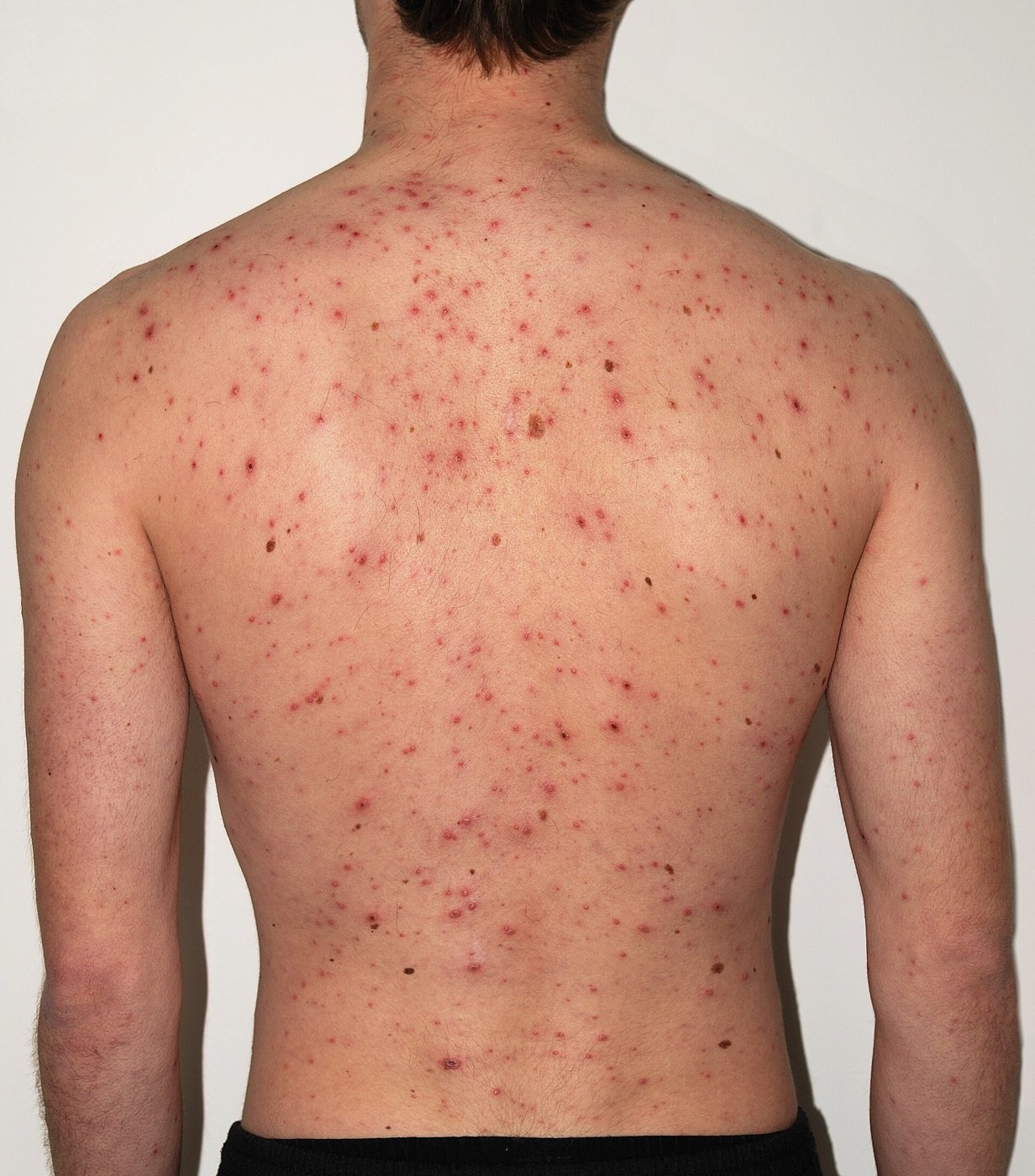
• Evolves through macules → papules → vesicles (the classic "dew drops on a rose petal") → crusts
• Appears in successive crops so that all stages coexist
• Typically begins on the face and trunk before spreading, and is sparser on the limbs
A history of contact with chickenpox or shingles supports the diagnosis.
The diagnosis is usually straightforward; the harder part is to:
• Identify the three high-risk groups in whom varicella can be life-threatening (neonates, pregnant women and the immunocompromised)
• Recognise the serious complications (pneumonia, encephalitis, severe bacterial infection)
Most healthy children need only supportive care.
Two system changes now frame every consultation:
• From 1 January 2026 the combined measles, mumps, rubella and varicella (MMRV) vaccine replaced MMR in the routine childhood schedule (doses at 12 and 18 months). Milder breakthrough disease in part-vaccinated children will therefore become a more common presentation
• Chickenpox became a notifiable disease in England in 2025
| Stage | Features and timing |
|---|---|
| Incubation | 10–21 days from exposure (commonly 14–16 days). |
| Prodrome | 1–2 days of fever, malaise and headache – often minimal or absent in young children. |
| Rash | • Macules → papules → vesicles → crusts, in crops so all stages coexist • Starts on the face, scalp and trunk, then spreads, and is sparser on the limbs • Mucous membranes may be involved |
| Infectious period | From 1–2 days before the rash until all lesions have crusted (usually ~5 days from onset; prolonged if immunosuppressed). |
| Return to school/work | Once all lesions have crusted over. |
Source: UKHSA Green Book (chapter 34) · UKHSA and NHS England (MMRV programme)
🩺 History
| Ask about symptoms |
|---|
|
• Establish a fever, malaise or headache prodrome, then an itchy, spotty rash with blisters? |
|
• Confirm whether new spots are still appearing (lesions arrive in crops)? |
|
• Pin down the exact time of rash onset (to guide antiviral timing in adults/adolescents)? |
|
• Screen for complications: cough, breathlessness, chest pain, confusion, drowsiness or rapidly spreading redness/pain? |
|
• In children, ask whether they are drinking enough and passing urine normally? |
| Ask about risk factors and modifiers |
|---|
|
• Check for recent contact with chickenpox or shingles, and the date of exposure? |
|
• Ask about previous chickenpox or varicella vaccination (helps gauge susceptibility of patient and contacts)? |
|
• Explore pregnancy, immunosuppression (including high-dose steroids, chemotherapy, biologics) or being a neonate – the high-risk groups? |
|
• Identify vulnerable household or occupational contacts (newborn, pregnant, immunocompromised; healthcare worker)? |
|
• Note smoking and adult age – both raise the risk of varicella pneumonia and complications? |
| 🧩 Patient Perspective |
|---|
|
➤ "Explore the patient's (or parent's) concerns – often scarring, time off school or work, and the risk to vulnerable people they live with or care for?" |
|
➤ "Ask how the itch is affecting sleep and feeding, and what practical support they need with isolation and childcare?" |
Source: UKHSA Green Book (chapter 34) · RCOG GTG 13
⚠️ Red Flags
| Escalation criteria |
|---|
|
➤ Suspected varicella pneumonia (especially adults, smokers, pregnant women) → any one of: • Cough • Breathlessness • Pleuritic chest pain • Tachypnoea → emergency admission |
|
➤ Suspected encephalitis or cerebellitis → any one of: • Confusion • Drowsiness • Severe headache • Seizures • Unsteadiness/ataxia → emergency admission |
|
➤ Severe bacterial infection, necrotising fasciitis or toxic shock → any one of: • Rapidly spreading erythema • Severe pain • High or rebounding fever → emergency admission |
|
➤ Haemorrhagic rash or bleeding into lesions → haemorrhagic varicella → emergency admission |
|
➤ Dehydration (especially young children) → any one of: • Reduced urine output • Lethargy • Poor feeding → urgent assessment |
|
➤ Chickenpox, or significant exposure, in any one of: • A neonate (aged 28 days or under) • Pregnant woman • Immunocompromised person → risk of severe, life-threatening disease → urgent specialist advice |
Source: UKHSA Green Book (chapter 34) · RCOG GTG 13
🔎 Examination
| Examination findings and signs |
|---|
|
• Rash: crops of lesions at different stages simultaneously (macules → papules → vesicles → crusts) – the pattern that confirms the diagnosis. |
|
• Distribution: face, scalp and trunk first, then spreading, and sparser on the limbs. Check the mouth and genital mucosa. |
|
• Systemic state: temperature, hydration, and general toxicity. |
|
➤ Complications: • Surrounding cellulitis or spreading erythema (bacterial superinfection) • Chest auscultation • A brief neurological screen if any concern |
|
• Atypical or severe: dense, haemorrhagic or necrotic lesions, or new crops continuing beyond ~6 days – think immunocompromise. |
|
⚠️ Common pitfall • Attributing a second fever spike after day 4–5 of the rash to "just the chickenpox". • New or climbing fever at this point, with increasing redness, pain or swelling around lesions, points to secondary bacterial infection (group A streptococcus or staphylococcus). • Re-examine for cellulitis and have a low threshold for escalation, as this is the route to necrotising fasciitis and toxic shock. |
Source: UKHSA Green Book (chapter 34)
💬 Patient Explanation
|
Chickenpox is a common viral infection that causes a fever and an itchy, blistering rash that scabs over in about a week, and it is usually mild in children. |
🧪 Investigations
| Test | Indication |
|---|---|
| Clinical diagnosis | • Almost always clinical • Routine laboratory confirmation is not needed in uncomplicated cases |
| Varicella-zoster immunoglobulin G (IgG) (VZV antibody) | Urgent susceptibility test in a pregnant woman or immunocompromised person with significant exposure and no reliable history of chickenpox or two vaccine doses – determines the need for post-exposure prophylaxis. |
| Vesicle swab for VZV polymerase chain reaction (PCR) – specialist-initiated | Where the diagnosis is genuinely uncertain, or there are implications for vulnerable contacts. |
| Bloods – FBC, U&E, LFTs, CRP | Only in severe or complicated disease requiring admission – arranged in secondary care. |
|
🧠 Clinical pearl • Breakthrough varicella in a partly-vaccinated child is often mild and atypical – fewer lesions, sometimes maculopapular rather than frankly vesicular, and a lower fever. • With the new measles, mumps, rubella and varicella (MMRV) programme from 2026 this picture will become more common. • Do not be falsely reassured by a sparse or atypical rash in a child with a clear contact – they can still transmit the virus to vulnerable people. |
Source: UKHSA PEP guidance · RCOG GTG 13
💊 Management
| All patients |
|---|
|
1. Confirm the diagnosis and decide whether the patient or a close contact is in a high-risk group. |
|
2. Offer symptomatic relief for fever, discomfort and itch. |
|
3. Advise infection control: off school/work until all lesions have crusted (~5 days); avoid newborns, pregnant women and the immunocompromised. |
|
4. Safety-net for respiratory, neurological and bacterial-infection red flags; most healthy children recover fully in about a week. |
|
5. Notify UKHSA – chickenpox is now notifiable in England. |
| Antiviral treatment |
|---|
|
• Immunocompetent adult or adolescent (aged 14 and over) within 24 hours of rash onset → consider oral aciclovir. |
|
🔑 Key principle – the risk is in the contact, not just the patient • In a healthy child the diagnosis is easy and the treatment is largely reassurance. • The decisions that change outcomes are about who else is exposed: a neonate, a pregnant woman, or someone immunocompromised. • Make a habit of asking, in every chickenpox consultation, "who does this person live with or care for?" • Act urgently for any high-risk contact. |
Source: UKHSA PEP guidance · RCOG GTG 13 · UKHSA Green Book (chapter 34)
🧾 Non-pharmacological Treatment
| Intervention | Details |
|---|---|
| Fluids | Encourage oral fluids to prevent dehydration, especially in young children with mouth lesions. |
| Skin comfort | • Keep nails short • Loose, smooth cotton clothing • Avoid overheating • Discourage scratching to reduce scarring and secondary infection |
| Infection control | Strictly avoid newborns, pregnant women and the immunocompromised, and avoid air travel, until all vesicles have crusted. |
| School/work | Exclude until all lesions have crusted over. |
| Vaccination (prevention) | Non-immune close contacts of high-risk individuals are offered varicella vaccine per the Green Book. |
Source: UKHSA Green Book (chapter 34)
⚕️ Pharmacological Treatment
| Treatment Options and Escalation |
|---|
|
➤ Symptomatic relief (all patients) |
|
→ Paracetamol (e.g. Calpol in children) for fever and discomfort. • Avoid NSAIDs (ibuprofen, e.g. Nurofen) – associated with severe necrotising soft-tissue infection in chickenpox. • Avoid aspirin under 16 years (risk of Reye's syndrome). |
|
→ Itch: topical calamine lotion (soothing, though evidence is limited and it can dry the skin). • A sedating antihistamine such as chlorphenamine (Piriton) at night may help sleep-disturbing itch in children aged 1 year and over – not recommended in pregnancy or breastfeeding. |
|
→ Healthy child: antivirals are not routinely recommended. |
|
→ Immunocompetent adult or adolescent (aged 14 and over): consider oral aciclovir 800 mg five times daily for 7 days if presenting within 24 hours of rash onset – particularly if severe, a smoker, or otherwise at increased risk. • Maintain good hydration and dose-adjust in renal impairment. |
|
→ Valaciclovir (Valtrex), a prodrug of aciclovir, is a suitable oral alternative. |
|
→ Pregnant, breastfeeding, immunocompromised or neonate: antivirals only on urgent specialist advice. • Aciclovir is recommended for treatment in pregnancy at ≥ 20 weeks (consider with caution earlier); severe disease needs IV aciclovir. |
|
➤ Post-exposure prophylaxis (PEP) – specialist-led |
|
→ Intramuscular varicella-zoster immunoglobulin (VZIG) is no longer available (withdrawn September 2024). • Oral antivirals are now first-line PEP for susceptible immunosuppressed people, susceptible pregnant women at any gestation and high-risk infants: • Aciclovir 800 mg four times daily, or valaciclovir 1000 mg three times daily, given from day 7 to day 14 after exposure. |
|
→ Intravenous immunoglobulin (IVIG) (Varitect CP) is reserved for those who cannot take or absorb oral antivirals (e.g. malabsorption, renal toxicity, allergy), and for neonates exposed around delivery (given alongside IV antivirals). |
|
➤ Prevention – Measles, mumps, rubella and varicella (MMRV) vaccine (ProQuad/Priorix-Tetra) |
|
→ A live attenuated combined vaccine offered routinely at 12 and 18 months. • As a live vaccine, it is contraindicated in pregnancy (avoid pregnancy for 4 weeks afterwards) and used with caution in immunosuppression. |
Source: UKHSA PEP guidance · UKHSA Green Book (chapter 34) · RCOG GTG 13
📌 Special Notes
|
📌 Special safety – pregnancy, neonates and the immunocompromised • Pregnancy: infection before 20 weeks risks congenital varicella syndrome (limb hypoplasia, microcephaly, cataracts, skin scarring; ~1–2% of cases). • The main maternal risk is severe varicella (pneumonia, hepatitis, encephalitis). • A pregnant contact with no reliable history of chickenpox or two vaccine doses needs urgent varicella zoster virus (VZV) immunoglobulin G (IgG) and, if susceptible, antiviral post-exposure prophylaxis (PEP) (days 7–14). • Treat with aciclovir if she develops chickenpox at ≥ 20 weeks. • Neonatal varicella: if the mother develops chickenpox from 7 days before to 7 days after delivery, the neonate is at risk of severe disease. • The neonate needs urgent specialist care with immunoglobulin ± IV antivirals. • Immunocompromised: risk of severe, disseminated or haemorrhagic varicella. • Low threshold for admission and IV aciclovir; seek urgent specialist advice. |
• Notifiable disease – chickenpox became notifiable in England in 2025 (it is also notifiable in Northern Ireland); notify UKHSA to support surveillance of the new vaccination programme.
• Shingles link – a non-immune person can catch chickenpox from someone with shingles (direct contact with vesicle fluid), but no one can "catch shingles" from a person with chickenpox – shingles is reactivation of the person's own latent virus.
• Air travel – advise avoiding flying until all lesions have crusted.
Source: UKHSA Green Book (chapter 34) · UKHSA PEP guidance · RCOG GTG 13
➡️ Referral Pathways
| Emergency/same-day |
|---|
|
• Suspected pneumonia, encephalitis/cerebellitis, severe bacterial infection (incl. necrotising fasciitis or toxic shock) or significant dehydration → 999 or emergency admission |
|
• Haemorrhagic varicella → emergency admission |
| Urgent specialist advice |
|---|
|
• Any chickenpox in a neonate (aged 28 days or under), pregnant woman or immunocompromised person → urgent specialist advice or admission |
|
• Significant exposure of a susceptible neonate, pregnant woman or immunocompromised person → urgent specialist advice for antiviral post-exposure prophylaxis (PEP) (check immunity first where relevant) |
| Routine/community |
|---|
|
• Healthy child or adult with uncomplicated chickenpox → community management, symptomatic relief and safety-netting |
|
• Non-immune close contact of a high-risk person → discuss varicella vaccination per the Green Book |
Source: UKHSA PEP guidance · RCOG GTG 13
🏠 Take Home Messages
• Diagnose clinically, risk-assess rigorously – chickenpox is usually mild in children, but identify the three high-risk groups (neonates, pregnant women, immunocompromised) immediately, as disease can be life-threatening.
• Get the analgesia right – use paracetamol; avoid NSAIDs (linked to severe necrotising soft-tissue infection) and aspirin in under-16s (Reye's syndrome).
• Antivirals are targeted, not routine – consider oral aciclovir 800 mg five times daily for 7 days in immunocompetent adults and adolescents aged 14 and over within 24 hours of rash; healthy children do not need it.
• Post-exposure prophylaxis (PEP) has changed – intramuscular varicella-zoster immunoglobulin (VZIG) was withdrawn in September 2024; oral antivirals (days 7–14) are now first-line for susceptible immunosuppressed, pregnant or high-risk infant contacts – seek urgent specialist advice.
• Two system changes – chickenpox is now notifiable in England (2025), and the measles, mumps, rubella and varicella (MMRV) vaccine entered the routine schedule (12 and 18 months) from January 2026; exclude from school/work until all lesions have crusted.
Source: UKHSA Green Book (chapter 34) · UKHSA PEP guidance · UKHSA and NHS England (MMRV programme)
|
🧭 AKT – high-yield facts • Rash evolves macules → papules → vesicles → crusts in crops (all stages coexist); infectious 1–2 days before the rash until all lesions crust (~5 days). Exclude from school/work until crusted. • Avoid NSAIDs (severe necrotising soft-tissue infection) and aspirin in under-16s (Reye's syndrome) – use paracetamol. • Aciclovir 800 mg five times daily for 7 days for immunocompetent adults and adolescents aged 14 and over within 24 hours of rash onset; not routine in healthy children. • PEP: intramuscular VZIG withdrawn September 2024 → Oral antivirals (day 7–14) are first-line for susceptible immunosuppressed people, pregnant women (any gestation) and high-risk infants → Intravenous immunoglobulin (IVIG) (Varitect CP) only if antivirals cannot be used • Pregnancy: infection < 20 weeks risks congenital varicella syndrome (~1–2%); maternal rash from 7 days before to 7 days after delivery risks severe neonatal varicella. • System facts: chickenpox notifiable in England since 2025; routine MMRV (live attenuated) at 12 and 18 months from January 2026. |
|
🎯 SCA A 16-week pregnant woman attends, anxious, because her 4-year-old has chickenpox and she does not think she ever had it as a child. She has read online about "birth defects" and wants to know whether her baby will be harmed. The challenge is uncertainty (her immunity is unknown) and a time-critical pathway (susceptibility testing, then antiviral PEP between days 7 and 14 if she is non-immune). There is also the need to acknowledge a real but usually small fetal risk without either dismissing her fears or amplifying them – while explaining that antivirals are used off-label in pregnancy on specialist advice. A strong consultation: • Explores her ideas, concerns and expectations – especially the fear of congenital varicella syndrome. • Explains honestly that most adults are immune and the absolute fetal risk is low, but that urgent varicella zoster virus (VZV) immunoglobulin G (IgG) is needed now to decide on antiviral PEP. • Agrees a shared plan with obstetric or specialist input. • Provides clear safety-netting – to seek help immediately if she develops a rash or any breathlessness, chest pain or neurological symptoms. • Delivers all this with empathy and respect for her autonomy. |
📎Reference: NICE CKS. Chickenpox. Available from: https://cks.nice.org.uk/topics/chickenpox/
📎Reference: UK Health Security Agency. Guidelines on post-exposure prophylaxis (PEP) for varicella or shingles. Available from: https://www.gov.uk/government/publications/post-exposure-prophylaxis-for-chickenpox-and-shingles
📎Reference: UK Health Security Agency. Varicella: the green book, chapter 34. Available from: https://www.gov.uk/government/publications/varicella-the-green-book-chapter
📎Reference: UK Health Security Agency. MMRV vaccination: information for healthcare professionals. Available from: https://www.gov.uk/government/publications/mmrv-programme-information-for-healthcare-practitioners/mmrv-vaccination-information-for-healthcare-professionals
📎Reference: Royal College of Obstetricians and Gynaecologists. Chickenpox in Pregnancy (Green-top Guideline No. 13). Available from: https://www.rcog.org.uk/guidance/browse-all-guidance/green-top-guidelines/chickenpox-in-pregnancy-green-top-guideline-no-13/
Three whole topics are free to read. Every topic opens with a free account.
Your CPD is counted as you read, and kept from the day you join.
Join us, it’s free