 GPAtlas
🧭 When to suspect
Suspect a significant burn when a patient presents with skin damage after exposure to a thermal (flame or hot contact), scald (hot liquid or steam), chemical, electrical or radiation source.
The history of the event – what, how hot, how long, and where – drives the two questions that change management most:
• Is there an inhalation injury?
• In a child or vulnerable adult, is the injury non-accidental?
Most burns seen in primary care are minor and superficial, but:
• Both depth and total body surface area (TBSA) are easily underestimated at first contact.
• A burn continues to evolve over the first 24–72 hours.
Assess every burn for depth, size, site and mechanism, then decide whether it can be managed in the community or needs referral.
Source: British Burn Association · National Network for Burn Care
🩺 History
| Ask about symptoms | Ask about risk and modifiers |
|---|---|
|
• Level and nature of pain (a deep or full-thickness burn may be painless). • Presence and extent of blistering. • Shortness of breath, wheeze, hoarse voice, cough or sore throat. • Difficulty swallowing or drooling (oropharyngeal involvement). |
• Mechanism, source, temperature and contact time of the injury. • Whether it happened in an enclosed space (inhalation risk). • First aid given, especially duration of cooling. • Tetanus immunisation status. • Comorbidity: diabetes, cardiac or respiratory disease, immunosuppression, neuropathy, epilepsy. • Any associated injuries (fall, blast, electrocution). • Safeguarding: does the explanation fit the injury, the developmental stage and the timing of presentation? |
🧩 Patient perspective
➤ "Explore the impact on mobility, work and any caring responsibilities."
➤ "Check understanding of wound care, and which signs of infection or deterioration should prompt review."
Source: British Burn Association · National Network for Burn Care
⚠️ Red Flags
| Escalation criteria – refer to ED or discuss with a specialist burns service |
|---|
|
➤ Suspected inhalation injury → any one of: • Facial or neck burns • Singed nasal hair • Soot in nose or mouth • Hoarse voice • Stridor • Carbonaceous sputum |
|
➤ Any chemical, electrical, radiation, friction or cold injury → refer regardless of size. |
|
➤ Full-thickness burn of any size (white, waxy, brown or charred, leathery and painless). |
|
➤ Burns ≥3% total body surface area (TBSA) in an adult or ≥2% TBSA in a child (the patient's palm with fingers ≈ 1%). |
|
➤ Burns to a special area → any one of: • Face • Hands • Feet • Perineum • Genitalia • Over a flexure or major joint |
|
➤ Circumferential burn of: • A limb • The neck • The chest → risk of constriction, compartment syndrome or restricted ventilation |
|
➤ Any deep dermal burn, or a burn in a child (particularly under 5) → keep a low threshold for discussion. |
|
➤ Suspected non-accidental injury or safeguarding concern in a child or vulnerable adult. |
|
➤ Features of sepsis, shock or toxic shock syndrome → any one of: • Fever • Rash • Diarrhoea or vomiting • Collapse → even with a small burn (classically in children) |
Source: National Network for Burn Care · British Burn Association
🔎 Examination
| Examination findings and signs |
|---|
|
• Airway and breathing: singed nasal hair, soot around the mouth or nose, hoarse voice, stridor or respiratory distress mandate immediate assessment. |
|
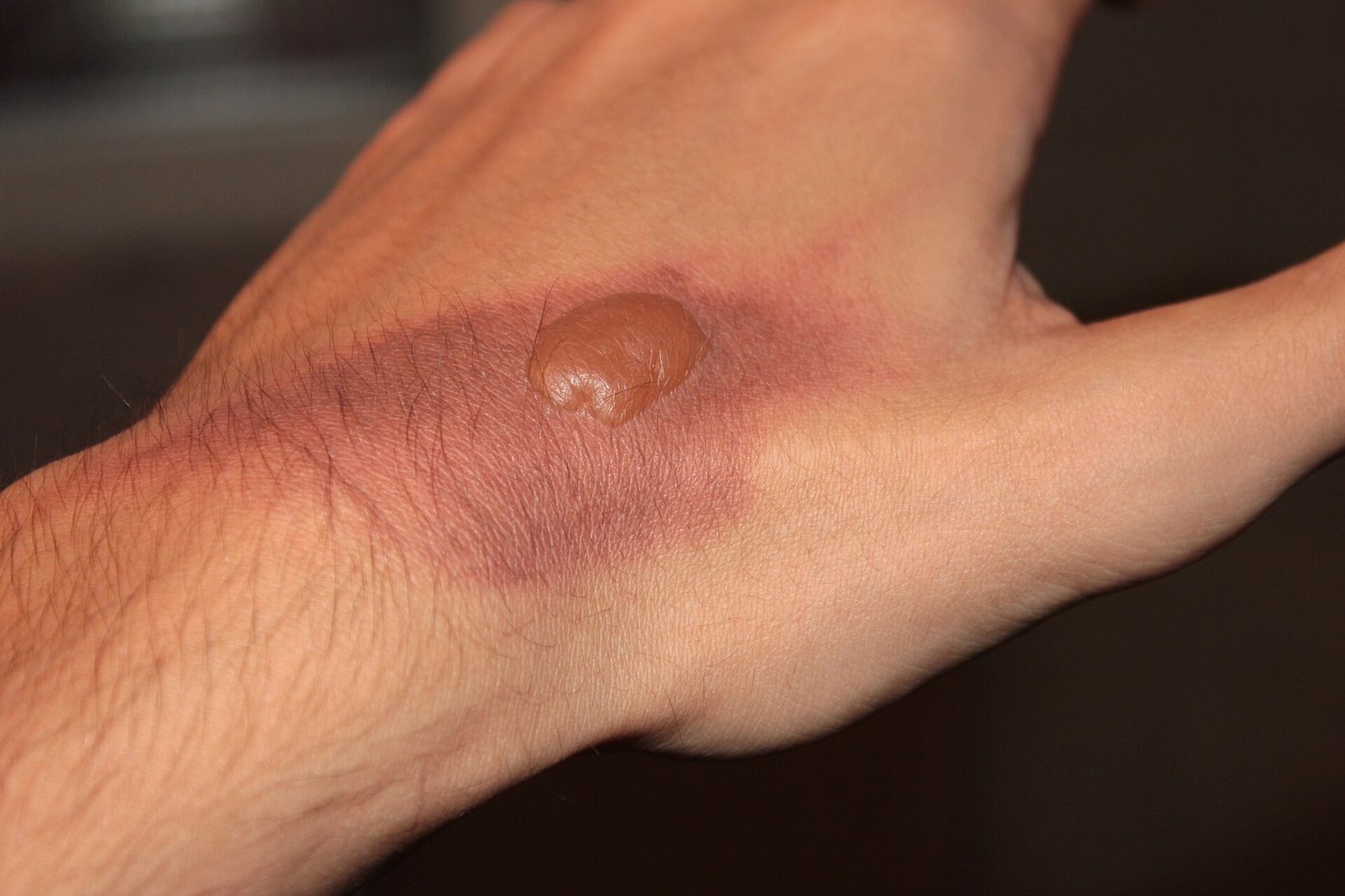
• Epidermal: red, dry, painful, no blisters, blanches (e.g. sunburn). |
|
• Superficial dermal: pale pink, painful, blisters, brisk capillary refill. |
|
• Deep dermal: blotchy red or white, less painful, reduced sensation, sluggish or absent refill. |
|
• Full thickness: white, waxy, brown or charred, leathery, dry, painless, no capillary refill. |
|
• Burn size (TBSA): estimate with the patient's whole palm including fingers as ≈ 1%. For larger burns use the Wallace Rule of Nines (adults), a Lund–Browder chart (children, or when accuracy matters) or another validated tool. Do not count simple erythema. |
|
• Circulation: assess for shock; in limb burns check distal pulses and look for circumferential constriction. |
|
• Document the pattern: distribution and edges (clear margins, "glove and stocking" or implement shapes) and compare with the history. |
|
⚠️ Common pitfall • Depth and TBSA are easy to mis-call at first contact. • A burn deepens over 24–72 hours. • Counting blanching erythema inflates the TBSA and can trigger unnecessary fluids. • A painless, non-blanching area is full-thickness, not "healing". • Re-examine before you commit to a plan. |
Source: British Burn Association · National Network for Burn Care
💬 Patient Explanation
|
A burn is damage to the skin from heat, chemicals or electricity, and how serious it is depends on how deep it goes and how much area it covers. |
🧪 Investigations
| Test |
|---|
|
• Clinical assessment alone |
|
• Capillary blood glucose |
|
• FBC, U&E, CRP |
|
• Carboxyhaemoglobin ± arterial blood gas (ABG) |
|
• ECG and creatine kinase |
|
• Wound swab |
|
• Photography (with consent) |
| Indication |
|---|
|
• No routine bloods for a minor burn in primary care; assessment is clinical (depth, total body surface area [TBSA], site, mechanism). |
|
• If diabetic or systemically unwell. |
|
• Hospital setting – extensive burns, suspected infection or sepsis. |
|
• Suspected smoke inhalation or enclosed-space fire (carbon monoxide). |
|
• Electrical burns – risk of arrhythmia and rhabdomyolysis. |
|
• Only if clinical signs of infection; routine swabbing of a fresh burn is not useful. |
|
• To document and track a burn and support remote specialist advice. |
Source: British Burn Association · National Network for Burn Care
💊 Management
| All patients |
|---|
|
1. Stop the burning and remove the source; take off clothing and jewellery near the burn unless stuck to the skin. |
|
2. Cool the burn as soon as possible – cooling is effective up to 3 hours after injury. |
|
3. Keep the patient warm during and after cooling to prevent hypothermia. |
|
4. Cover the burn with cling film. |
|
5. Provide simple analgesia. |
|
6. Assess tetanus status. |
| If severe/urgent |
|---|
|
• Assess airway and breathing first if inhalation injury is suspected; give high-flow oxygen and call for senior/anaesthetic help. |
|
• Arrange urgent ED transfer for any red flag; do not let the patient drive themselves. |
|
• Consider IV warmed crystalloid for extensive burns awaiting transfer; titrate to the receiving unit's advice. |
|
• Chemical: brush off dry chemical and irrigate copiously with water. |
|
• Electrical: isolate the source and obtain an ECG. |
|
• Do not apply creams or ointments before transfer – they obscure assessment. |
|
🔑 Key principle • The first 20 minutes matter more than anything else you can do. • Adequate cooling reduces burn depth and pain. • Keeping the rest of the patient warm prevents the hypothermia that cooling can cause. • Cool the burn, warm the patient – then get depth, total body surface area (TBSA) and site right and decide: community or referral. |
Source: British Burn Association · National Network for Burn Care
🧾 Non-pharmacological Treatment
| Intervention |
|---|
|
• Cooling |
|
• Covering |
|
• Blisters |
|
• Dressing |
|
• Elevation |
|
• Review |
| Details |
|---|
|
• Cool or lukewarm running water for 20 minutes (ideal ≈ 15°C); never ice or iced water. Stop if the patient's temperature falls below 35°C. |
|
• After cooling, lay cling film over the burn lengthways (not circumferentially) or use a clean clear plastic bag for a hand/foot – a temporary cover until a dressing is applied. |
|
• Leave blisters intact in primary care to protect the wound; de-roofing or aspiration is a decision for a competent practitioner or specialist, not a routine step. |
|
• Clean the wound and apply a non-adherent dressing (e.g. paraffin-impregnated tulle) with a secondary absorbent layer; arrange review and re-dressing. |
|
• Elevate the affected limb to reduce swelling and pain. |
|
• Re-assess at 24–48 hours, when the true depth may become clear, then as often as healing requires. • A superficial burn not healed by ≈ 2–3 weeks should be reassessed or referred. |
|
🧠 Clinical pearl • A burn that looks superficial on day one can be deep dermal by day three. • Bring minor burns back at 24–48 hours rather than discharging at first contact. • Re-checking depth and total body surface area (TBSA) is the most reliable way to catch a burn that is deeper than it first appeared. |
Source: British Burn Association · National Network for Burn Care
⚕️ Pharmacological Treatment
| Treatment options and escalation |
|---|
|
➤ Analgesia (first-line) |
|
→ Paracetamol – regular oral dosing is first-line; adults max 4 g/24 h, weight-based dosing in children. Hepatotoxic in overdose. |
|
→ Ibuprofen – add for extra analgesia. Use with caution or avoid in dehydration, hypovolaemia or extensive burns (risk of acute kidney injury), and in asthma, peptic ulcer or significant renal impairment. |
|
→ Avoid aspirin in children under 16 (Reye's syndrome). → Oral morphine is occasionally needed for larger burns or dressing changes – usually in secondary care. |
|
➤ Topical antimicrobials (selected partial-thickness burns – often specialist-initiated) |
|
→ Silver sulfadiazine (Flamazine) – for partial-thickness burns at risk of infection. • Contraindicated near term and in infants under 2 months; caution in glucose-6-phosphate dehydrogenase (G6PD) deficiency and sulfonamide hypersensitivity (haemolysis, rash). • Over large areas it is absorbed and can cause transient leucopenia (typically 2–4 days) and accumulate in renal/hepatic impairment. • It stains the wound and obscures assessment, so it is not routine for small minor burns. |
|
→ Silver-containing or honey dressings – an alternative where infection risk is a concern; choose per local formulary. |
|
➤ Symptomatic skin care |
|
→ Emollients – for a healing superficial epidermal burn (e.g. sunburn) that is dry or itchy; avoid greasy or oily products on a fresh burn. |
|
➤ Infection |
|
→ Antibiotics are not given prophylactically – reserve oral antibiotics (per local policy, e.g. flucloxacillin for staphylococcal/streptococcal cellulitis) for a clinically infected burn; swab first. |
|
→ Sudden fever, rash and hypotension – even with a tiny burn – suggests toxic shock syndrome. This is an emergency, not a course of oral antibiotics. |
|
➤ Tetanus prophylaxis |
|
→ Assess every burn for tetanus risk (burns can be tetanus-prone). Give a tetanus-containing vaccine if the primary course or boosters are incomplete or uncertain; add tetanus immunoglobulin for high-risk wounds (heavily contaminated, devitalised, or surgery delayed > 6 hours). |
Source: UKHSA Green Book (tetanus) · British Burn Association
📌 Special Notes
|
📌 Safeguarding – non-accidental injury • Burns and scalds are a recognised presentation of physical abuse and neglect; keep a high index of suspicion in children and vulnerable adults. Suspicious features: • An explanation that is absent, inconsistent or implausible for the developmental stage. • Delayed presentation. • A burn in a non-mobile infant. • Scalds with a clear upper margin, "glove-and-stocking" or immersion pattern. • Contact burns in the shape of an implement (cigarette, iron). • Burns to normally protected areas (backs of hands, soles, buttocks, back, genitalia). Act on concern: • Seek the explanation openly from carer and child. • Document carefully. • Discuss with your named/designated safeguarding lead, and refer per local procedure. • A suspected non-accidental injury (NAI) burn should be referred to a Burn Unit/Centre. |
• Chemical burns – irrigate copiously with water (≥ 20–30 minutes) and remove contaminated clothing; identify the agent. Hydrofluoric acid is a special case (severe pain, hypocalcaemia) that needs calcium gluconate gel and urgent specialist input. Phone the National Poisons Information Service or use TOXBASE for any significant chemical exposure.
• Electrical burns – surface injury may belie deep tissue and cardiac damage; isolate the source safely, obtain an ECG and refer. High-voltage and lightning injuries always go to ED.
• Sunburn – extensive or blistering sunburn is a burn; manage symptomatically and counsel on prevention.
• Higher-risk groups – children under 5, older people, and those with diabetes, neuropathy, immunosuppression or reduced capacity warrant a lower referral threshold.
Source: NICE CG89 · National Network for Burn Care
➡️ Referral Pathways
| Same-day/urgent | Routine |
|---|---|
|
• Any red flag: → Inhalation injury → Chemical, electrical, radiation, friction or cold injury → Full-thickness burn → ≥3% total body surface area (TBSA) in an adult or ≥2% in a child → Burns to face, hands, feet, perineum, genitalia or over a flexure or major joint → Circumferential burns → Suspected non-accidental injury (NAI) → Sepsis, shock or toxic shock syndrome • Low threshold for discussion or referral in children (especially under 5), older people and those with significant comorbidity. • Non-specialists can phone the regional burns service at any time for advice (many accept secure photographs). |
• Practice or community nursing for follow-up and re-dressing of minor, non-complex burns managed in the community. • Re-refer if a superficial burn has not healed by ≈ 2–3 weeks, changes appearance, or shows signs of infection or poor healing. |
Source: National Network for Burn Care · British Burn Association
🏠 Take Home Messages
• Cool early, cool long – cool running water for 20 minutes (never ice), effective up to 3 hours, then keep the patient warm to prevent hypothermia.
• Get depth, total body surface area (TBSA) and site right – palm-with-fingers ≈ 1%, don't count erythema, and remember a painless, waxy burn is full-thickness.
• Rule out inhalation injury – enclosed-space fire, soot, hoarseness or facial burns mean urgent airway assessment.
• Refer to current UK thresholds – any deep or full-thickness burn, ≥3% TBSA in adults or ≥2% in children, special-area, circumferential, or chemical/electrical burns go to specialist burns services.
• Always think safeguarding – if the burn does not fit the history, the developmental stage or the timing, act and refer.
Source: British Burn Association · National Network for Burn Care
|
🧭 AKT – high-yield facts • First aid: cool running water for 20 minutes, effective up to ≈ 3 hours post-injury; ice is contraindicated (vasoconstriction worsens injury and causes hypothermia). • TBSA: palm including fingers ≈ 1% → Wallace Rule of Nines (adults) and Lund–Browder chart (children, or when accuracy matters) are the standard tools → Erythema is excluded • Depth: full-thickness burns are white, waxy or charred, leathery and painless with no capillary refill – pain is reassuring, painlessness is not. • Current UK referral threshold to specialist burns services: ≥2% TBSA in children, ≥3% in adults (plus all deep/full-thickness, special-area, circumferential, chemical/electrical, and suspected non-accidental injury [NAI]). • Silver sulfadiazine (Flamazine): avoid in glucose-6-phosphate dehydrogenase (G6PD) deficiency, sulfonamide allergy, near term and in infants < 2 months; can cause transient leucopenia. • Prophylactic antibiotics are not indicated for burns; assess every burn for tetanus risk. |
|
🎯 SCA A parent brings a 14-month-old with a scald to both buttocks and the backs of both thighs, said to be from "climbing into the bath". The burn has a clear upper margin, the child is not yet walking, and the parent waited a day before coming in. The genuine dilemma is holding an open, non-accusatory relationship with an anxious parent while acting on a real safeguarding concern, without prejudging the family. A strong consultation: • Gives proper burn first aid and analgesia and assesses depth and TBSA. • Explores the carer's and (developmentally appropriate) child's account, drawing out ideas, concerns and expectations. • Explains honestly, without colluding or accusing, why this pattern needs hospital and specialist review. • Documents the history verbatim, and records the distribution and timing. • Involves the named/designated safeguarding lead and refers per local procedure. • Safety-nets with clear follow-up. |
📎Reference: National Institute for Health and Care Excellence. Clinical Knowledge Summaries: Burns and scalds. Available from: https://cks.nice.org.uk/topics/burns-scalds/
📎Reference: National Network for Burn Care and British Burn Association. National Burn Care Referral Guidance. Available from: https://www.britishburnassociation.org/national-burn-care-referral-guidance/
📎Reference: UK Health Security Agency. Tetanus: the green book, chapter 30. Available from: https://www.gov.uk/government/publications/tetanus-the-green-book-chapter-30
📎Reference: National Institute for Health and Care Excellence. Child maltreatment: when to suspect maltreatment in under 18s (CG89). Available from: https://www.nice.org.uk/guidance/cg89
📎Reference: British National Formulary (NICE). Sulfadiazine silver. Available from: https://bnf.nice.org.uk/drugs/sulfadiazine-silver/
📎Reference: NHS. Burns and scalds. Available from: https://www.nhs.uk/conditions/burns-and-scalds/
Three whole topics are free to read. Every topic opens with a free account.
Your CPD is counted as you read, and kept from the day you join.
Join us, it’s free